See what the reservoir model predicts seismically.
Sim2Seis converts dynamic reservoir-model states into elastic properties and synthetic seismic response for direct comparison with observed evidence.
Does the model predict what we observe?
A reservoir model becomes more useful when its predicted response can be inspected against what the seismic evidence actually shows.
- 01Dynamic Model
- 02Pressure / Saturation
- 03Rock Physics / PEM
- 04Elastic Properties
- 05Synthetic Seismic
- 06Predicted Response
Real product evidence
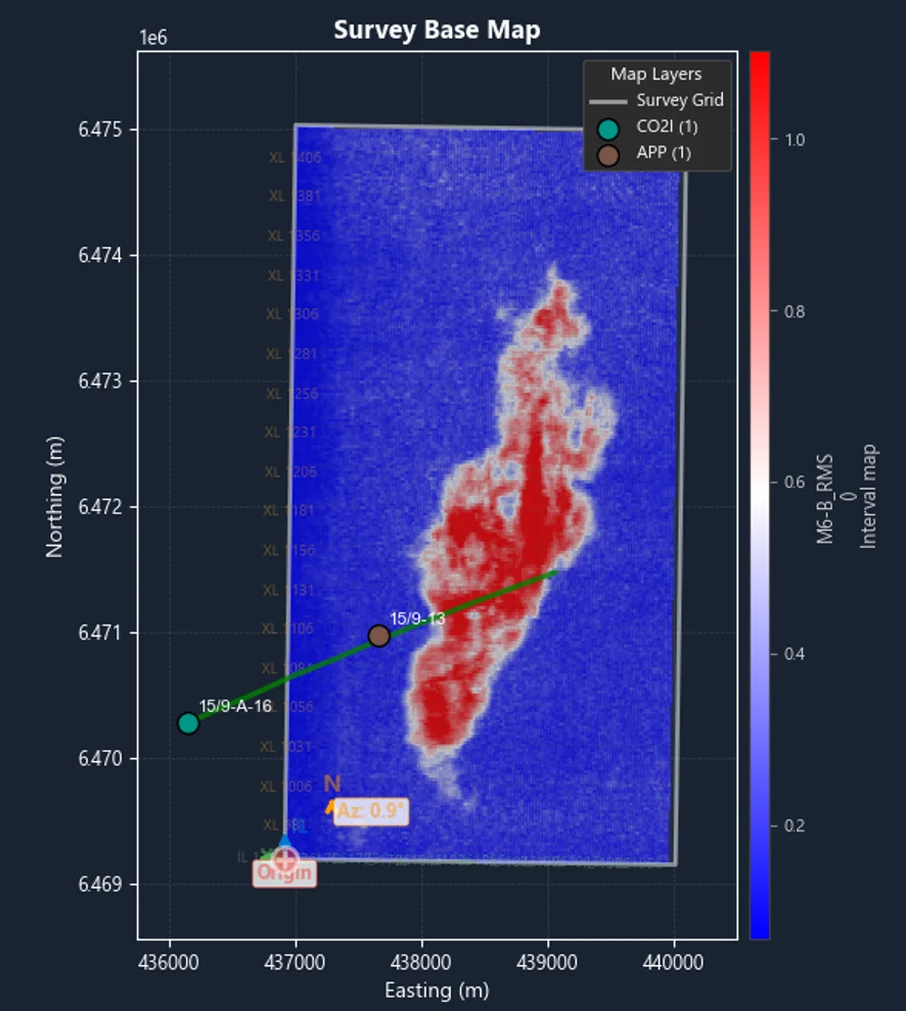
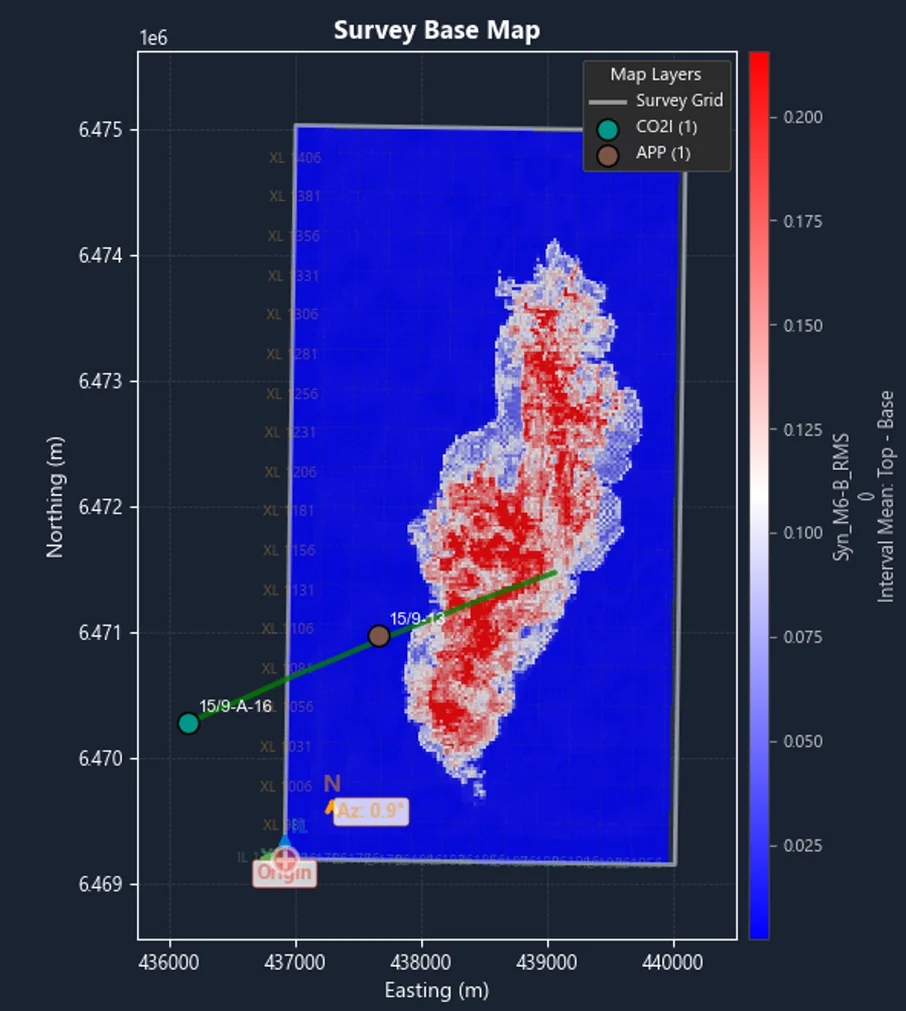
4D seismic amplitude
4D seismic amplitude
Inputs
- Dynamic reservoir-model states
- Pressure and saturation
- Petroelastic model
- Wavelet and seismic context
Outputs
- Elastic properties
- Synthetic seismic
- Predicted 4D response
- Model-versus-evidence comparison
Interpretation context
Mismatch can indicate where assumptions or the dynamic reservoir model require review. Comparison supports calibration; it does not prove a unique reservoir explanation.
Request a Technical Demo